
Licensed locally
Who does this work in Westchester
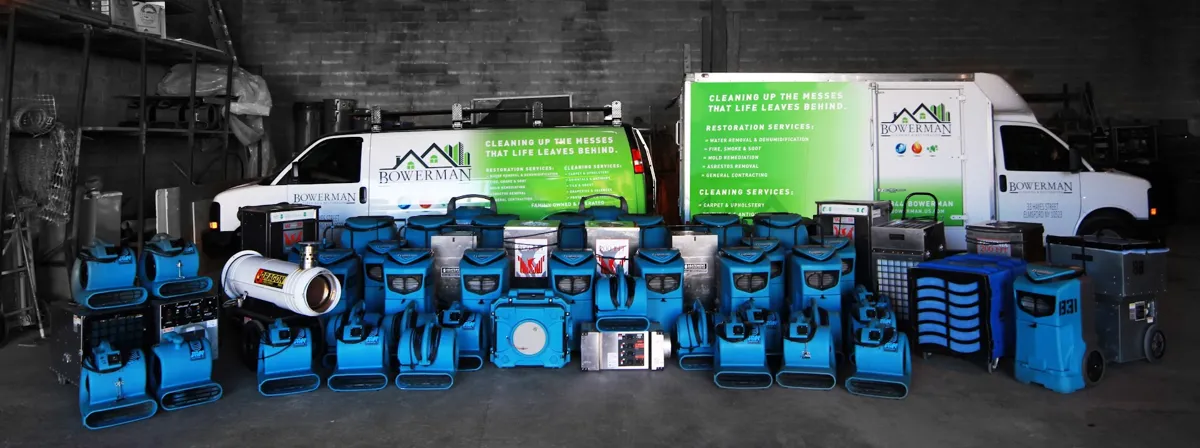

A burst pipe can release hundreds of gallons an hour. Westchester freeze-thaw winters make it the most common single-room catastrophe we see — here is the playbook.
Find the main shut-off and close it — every adult in the house should know where it is before winter. Then kill power to affected rooms if water reached outlets or fixtures, open faucets to drain the lines, and photograph the damage. Extraction crews handle the rest, but the gallons you stop in the first minutes are the drywall you do not replace.
Exterior-wall plumbing, uninsulated crawl spaces and hose bibs are the Westchester classics. A freeze-thaw cycle does not need a deep freeze — a windy 20°F night on an uninsulated run is enough. After the repair, ask the plumber about rerouting or insulating that run, or next winter writes the same check.
The visible puddle is rarely the scope. Water follows framing: down wall cavities, across ceiling bays, under flooring. A moisture-map after a burst pipe almost always shows a bigger footprint than the eye suggests — that map is what separates a $1,500 dry-out from a $9,000 mold job next spring.
Usually yes — sudden discharge from plumbing is a standard covered peril, unlike groundwater flooding. The insurer will still expect you to have stopped the water and started mitigation promptly.
If water reached drywall, insulation, wood floors or cabinetry — yes. A plumber stops the leak; they do not dry your walls, and closed cavities dry poorly on their own.
Insulate exposed runs, disconnect hoses before November, keep heat at 55°F+ in vacant parts of the house, and know your main shut-off. Battery leak sensors near the water heater and washing machine are cheap early warning.
Tell us what happened — we will point you to a licensed local crew that can be on site today.